

In aerospace machining, thin wall structures, strict positional tolerances, and hard-to-machine materials can result in deformation and vibration in machining operations. With WayKen multi-axis CNC machining, heat treatment process control, and precision fixtures, which are used in the aerospace parts manufacturing, dimensional accuracy, fine surface finish, and consistent across batches can be met.
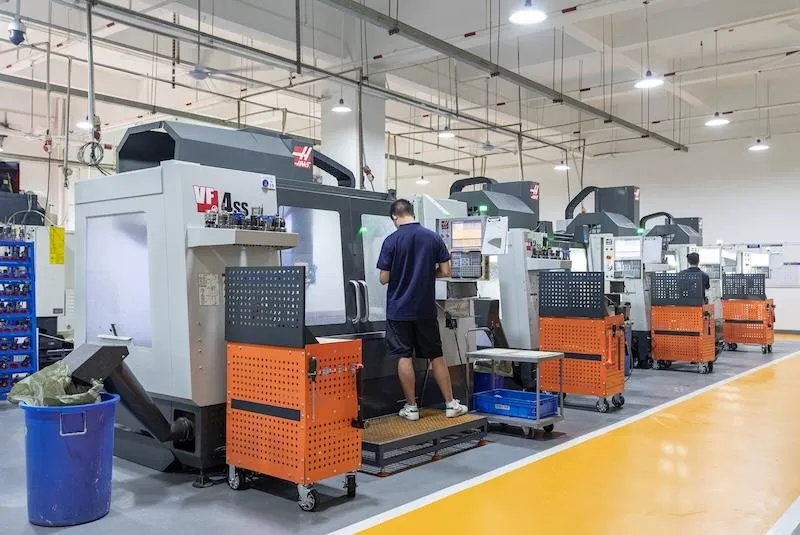
Machining Strategies from High-Strength Steel to Titanium Alloys
For certain precision structural components used in aerospace equipment, WayKen selects S45C steel as the material according to customer requirements. They use twice rounds of aging heat treatment to accurately control the residual stress in the material.
Rough machining on these parts begin with a turning-milling compound machining process. Then using the heat treatment to achieve the hardness of 28-32 HRC. And then using the precision machining by turning and CNC milling. Lastly, using the final sizing treatment. This ensures workpiece stability throughout production, meeting the rigorous tolerance requirements of the aerospace industry.
This order of machining operations is critical to machining aerospace structural parts that have deep pockets, varying wall thicknesses, or support-less feature lengths. Rough machining liberates the internal stress contained within the unprocessed raw stock, prevents possibly warp during either the semi-finish or finish machining cycles. On WayKen’s shop floors, their machine technicians leave enough allowance of stock prior to applying aging heat treatment; allowing the material to be stable while precision finishing occurs.
Titanium creates a lot of heat in the cutting area and possesses low thermal conductivity than most aluminum alloys. To increase the tool life and reduce the amount of material that builds up on the tool edge, machinists use several different techniques including adjusting the spindle speed, radial depth of cut, coolant flow rate and feed rate for deep cavities machining. In addition, because aerospace bracket materials are generally thin-walled and can also be load carrying structures, maintaining stable machining conditions are critical to ensure that the geometric tolerance remains as close to acceptable limits as possible.
Multi-Axis Custom Machining for Large and Irregular Geometries
In a case of multi-surface component made of aluminum alloy 2024 for aerospace equipment, WayKen uses 3+2 axis or full 5-axis CNC machining centers for processing. Through optimized fixturing solutions and tool paths, WayKen achieve precision machining of polyhedral structures in a single setup.It ensures the dimensional tolerances of each aperture of the workpiece. And it also ensures geometric tolerances such as concentricity, parallelism, circular runout, position, and flatness. It minimizes errors caused by multiple clamping operations, ensuring consistent machining precision.
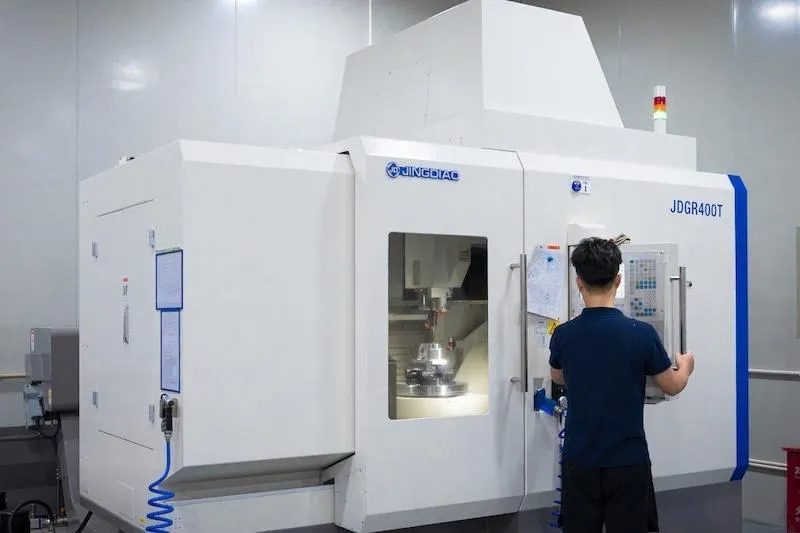
Fixture design also directly affects machining stability. Due to significant mass loss during material removal, large aluminum aerospace structures become rigid and prone to vibrational movement during finishing operations. In order to minimize vibration and localized deformations, the contact point and clamp forces are optimized based upon the part geometry and the machining sequence.
Optimization of toolpaths is also very critical when machining with multiple axes. Smooth tool engagement and controlled step-over values assist in minimizing fluctuation in spindle loads which results in better dimensional repeatability and surface finish.
High-Precision Tolerances and Surface Quality
For batch-production aerospace projects, maintaining consistent dimensional accuracy across hundreds or thousands of parts requires far more than high-end CNC equipment alone. Precision depends on how well machining variables such as fixture stability, tool wear, spindle calibration, and thermal control are managed throughout the entire production cycle.
For enhanced repeatability, Wayken uses custom fixtures to hold the batch-produced parts during CNC machining while minimizing variations between each batch of parts. The use of automatic tool setting systems with these custom fixtures ensures that errors introduced during the manual measurement of cutting tools are eliminated, as are dimensional errors that may occur during extended CNC machining operations. These processes are carried out under ISO9001 and IATF16949 quality management systems.
WayKen’s CNC machining processes can achieve dimensional tolerances within ±0.05 mm from the specified dimensions of the machined part. Critical aerospace and medical components can be machined to tolerances between ±0.005 mm and ±0.002 mm. Surface finishing processes can achieve a surface finish quality of Ra0.2 μm.
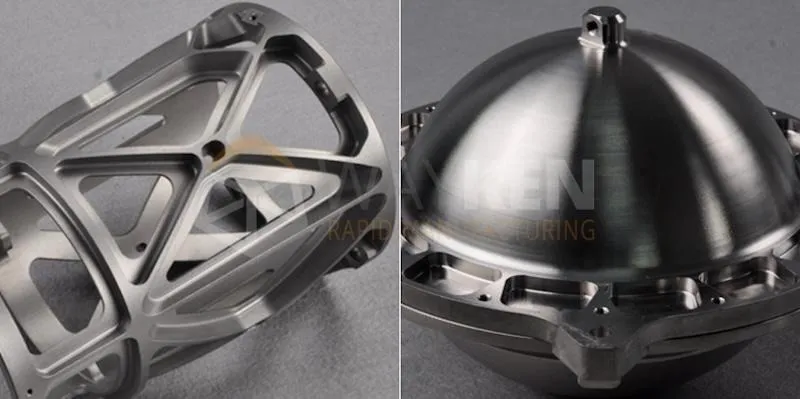
The precision required to machine components to micron-level dimensions requires the control of CNC machining processes. During extended CNC machining operations, especially with metals such as titanium or stainless steel, cutting tools naturally wear down, which impacts the diameter of machine bores and the quality of the part’s entire machined surface. Automatic tool setting systems compensate for this natural tool wear.
The quality of the machined surface of aerospace components is also critically important. Parts with a Ra0.2 μm surface finish are required for sealing applications. These finishing processes require the use of low vibration CNC machining processes and tooling. Any inconsistencies on the machined part’s surface will impact the functionality of components such as actuator housings and sealing surfaces.
Conclusion
The precision machining of aerospace components relies not only on the capability of the machines but also on the stability of the process. Every phase of the process starting from the control of residual stresses to the heat treatment schedule and finally, the machining itself plays a role in determining the accuracy of the part. The company’s expertise in machining and precise process control makes WayKen a reliable supplier of high-quality aerospace parts.
